
Is Nature-Based Movement Better Than the Gym?
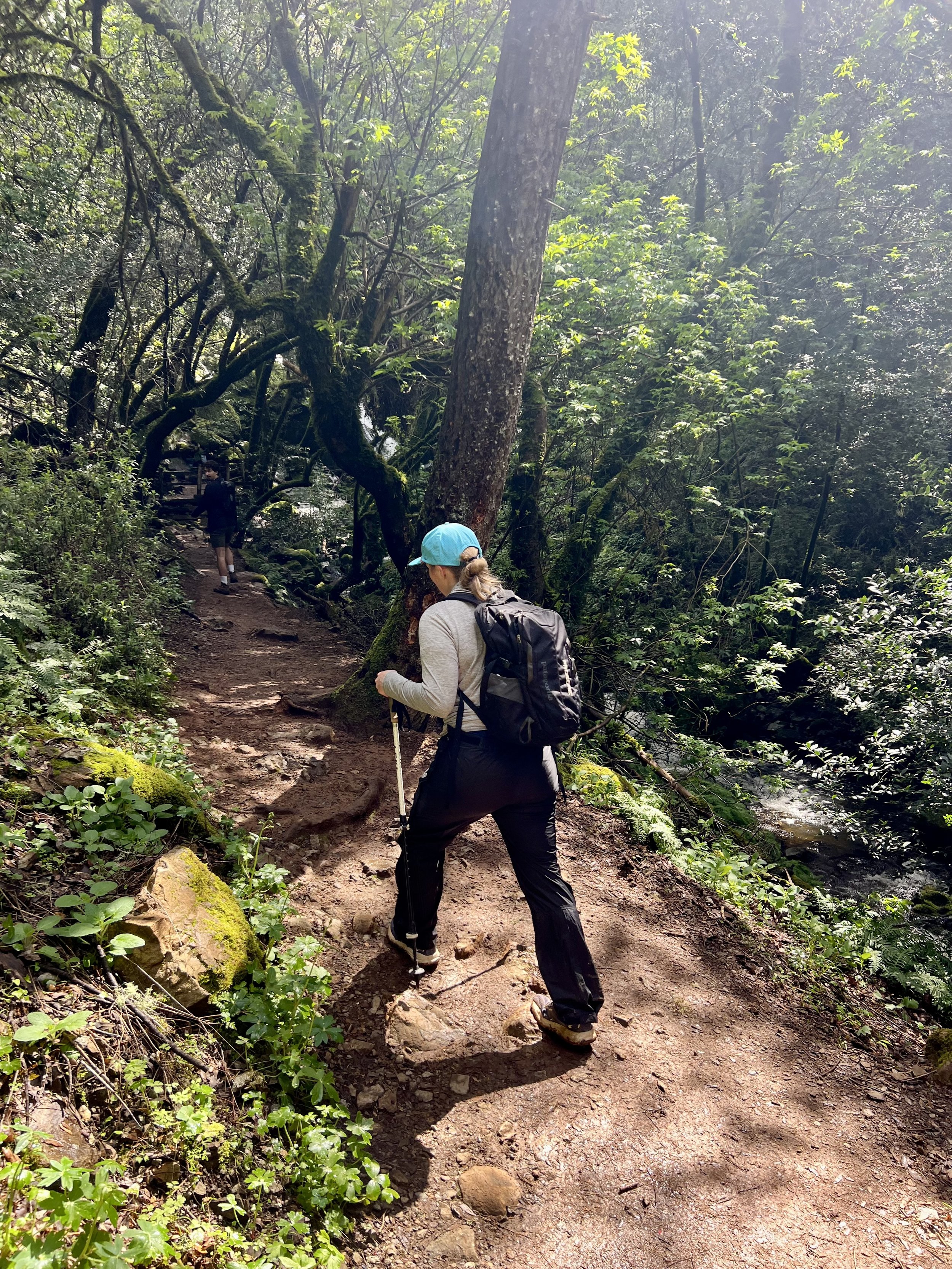
For decades, fitness has been packaged into climate-controlled rooms, measured in minutes, reps, mirrors, and machines. Yet despite more gyms, apps, and wearable data than ever before, many people feel disconnected from their bodies—injured, overstimulated, and exhausted rather than energized.
So the question isn’t radical. It’s ancient:
IS NATURE-BASED MOVEMENT ACTUALLY BETTER FOR US THAN THE GYM?
The answer depends on what we mean by better.
If better means sustainable strength, metabolic health, mental clarity, and a body that feels good to live in—then possibly. For most people, movement in nature isn’t just better. It’s what we were designed for. This understanding shapes the movement philosophy at The Coast Ridge, where walking through nature is the foundation of the 4 Day Reboot experience.
THE BODY’S ORIGINAL ENVIRONMENT
Human bodies evolved over hundreds of thousands of years walking varied terrain—coastlines, forests, hills, valleys. We didn’t evolve sitting for hours, then compressing movement into short, intense bursts under artificial light.
Nature-based movement restores the conditions our systems recognize:
Uneven ground that activates stabilizing muscles
Long durations of low-impact effort
Natural light regulating circadian rhythm
Fresh air supporting breath and nervous system balance
This isn’t nostalgia. It’s physiology.
TRAILS vs. TREADMILLS: WHAT’S REALLY HAPPENING
A treadmill controls your pace, incline, and surface. Your body adapts quickly—and then checks out.
A trail does the opposite.
Every step asks something slightly different of your feet, ankles, hips, and core. Uneven trails require constant micro-adjustments, building coordination, joint resilience, and real-world strength that translates far beyond the trail.
In nature, your body is awake.
DURATION OVER INTENSITY
Sustained movement—walking for hours at a natural pace—taps into fat metabolism, stabilizes blood sugar, and reduces stress hormones rather than spiking them. This is the zone where real change happens, especially for people carrying chronic stress, fatigue, or inflammation.
You don’t leave depleted.
You leave clear.
THE NERVOUS SYSTEM DIFFERENCE
This may be the most overlooked benefit.
Gyms stimulate the nervous system: loud music, mirrors, screens, competition, time pressure. For some people, that’s motivating. For many others, it’s another layer of stress.
Nature does the opposite.
Moving outside shifts the nervous system toward regulation. Breath deepens. Vision softens. Thoughts slow. The body exits fight-or-flight and re-enters rhythm.
That’s not just relaxing—it’s essential for recovery, hormonal balance, and long-term health.
STRENGTH WITHOUT BREAKDOWN
Nature-based movement doesn’t mean “easy.”
Hiking hills, carrying your body over distance, navigating elevation—all of this builds powerful lower-body and core strength. But it does so without compression, isolation, or overuse.
Instead of breaking the body down to rebuild it, natural movement conditions the body while preserving it.
This is why it’s sustainable well into later decades of life.
MENTAL CLARITY IS NOT THE BONUS—IT’S THE POINT
One of the most consistent outcomes of long days moving outdoors is mental clarity.
Without headphones, mirrors, or metrics, attention naturally turns inward and outward at the same time. Problems untangle. Perspective returns. Creativity opens.
Movement in nature isn’t something you squeeze in before real life.
It realigns real life.
SO… IS THE GYM BAD?
No.
Gyms can be useful tools—especially for rehabilitation, strength training, or short, targeted sessions. But they were never meant to replace natural movement entirely.
The problem isn’t the gym.
It’s the belief that fitness happens only there.
RETURNING TO WHAT WORKS
Nature-based movement doesn’t ask for motivation. It invites participation.
One foot in front of the other.
A changing horizon.
A body remembering what it knows how to do.
When movement happens in the environment we evolved within, effort feels purposeful, strength builds quietly, and health becomes a byproduct—not a pursuit.
That’s not a trend.
That’s a return.
A Final Thought
If you’ve ever felt clearer after a long walk than after a workout…
More energized after a day on the trail than an hour at the gym…
More yourself outside than inside—
Your body is already answering the question.